 LOGIN


The veterinary voice for animal welfare: reflecting on BVA’s updated Animal Welfare Strategy
11 Jul 2025
Ahead of chairing a BVA Congress discussion on dog breeding health checks, Dr Elizabeth Mullineaux, chair of BVA’s charity the Animal Welfare Foundation, lays out the issues and challenges for vet teams in preventing dog breeding problems.
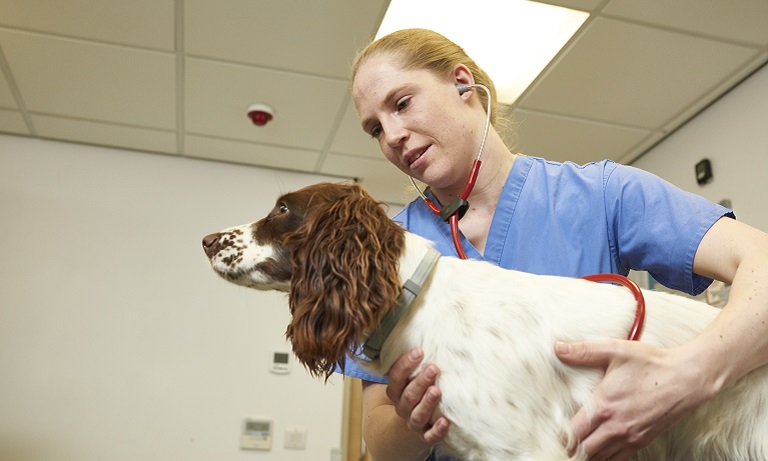
Breed-related health problems are a huge issue for vets and owners alike, but most importantly can have huge negative impacts on the health and welfare of animals in our care. In this BVA Congress session supported by BVA’s charity, the Animal Welfare Foundation (AWF), we will focus on breeding choices for dogs and how we determine which animals are ‘fit to breed’.
Once a dog is in front of us as a patient, all we can do is mitigate the problems the animal may have been born with. But how do we help prevent these issues from occurring in the first place? The two groups of people where advice can be targeted are prospective owners and breeders. For owners, simply making an informed choice of breed is a big step in the right direction and visual breed considerations, such as avoiding brachycephaly, may be enough. The Innate Health Assessment (IHA) tool, developed by Dan O’Neill and supported by the All-Parliamentary Group for Animal Welfare (APGAW), is a useful, simple phenotypic assessment that can be used by owners, breeders and local authorities. Whilst IHA has clear benefits for breeds with extreme conformations, it can be argued that it is less useful in common breeds, such as labradors, retrievers and spaniels, that are likely to ‘pass’ the IHA with flying colours but might still have breed-related health problems.
There is a huge and increasing range of possible tests to help with this, from the BVA/Royal Kennel Club (RKC) Canine Health Schemes for hips, elbows and eyes, to a range of genetic tests for a whole host of clinical conditions. How to navigate all this for every breed is a challenge the RKC is trying to address through its new Veterinary Conformation Assessment, which will be formally launched at the end of November. However, while this will be relevant for pedigree dogs – what about the cross-bred pets we see so commonly these days? How do we apply these tests to those dogs?
There’s a lot to digest here and an increased pressure on vets to provide the correct advice to clients choosing puppies and those wanting to breed responsibly from their pets. There are also questions around the evidence that the various tests and schemes lead to the desired impact on negative traits and benefit canine health and welfare.
Luckily, we have three real experts and driving forces behind the health schemes joining me at BVA Congress to discuss these questions- Dan O’Neill from the Royal Veterinary College, Alison Skipper for the RKC, and Mike Herrtage from the University of Cambridge, who is a scrutineer for the BVA/RKC hip and elbow schemes. The three are our panellists for what should be a useful and lively debate, with opportunity for audience questions and input, and I would encourage all colleagues with an interest in canine welfare to attend.
Apart from examining what ‘good breeding’ means in 2026, we will discuss how vet team members can navigate the current range of assessments to improve dog welfare rather than complicate it. You can expect a frank, evidence-based debate about what the schemes measure, what they miss, and how vet professionals can guide clients through this evolving landscape with clear, balanced advice that's both practical and empathetic.
Fit to breed? Understanding new canine health assessments is supported by AWF and takes place at BVA Congress on 19 November from 12-1pm.
|
About AWF Canine breeding is just one of the animal welfare challenges that face veterinary professionals in their daily lives. Many vets and RVNs have limited teaching and practical experience in dealing with these issues. There is also a very variable evidence base to help us with decision making and few opportunities to debate these challenges. This is where BVA’s charity, AWF, fills an essential role. In May this year I was lucky enough to become chair of the charity’s trustee board and I’m passionate about everything we do. AWF is run independently by veterinary and animal welfare professionals with a collective vision for all animals to have a better life, with improved welfare, through support of the veterinary and associated professions. The charity provides grants for students and post-graduate researchers to carry out animal welfare related projects and also provides educational resources for animal owners. Once a year, it also hosts the amazing welfare-focused conference, the AWF Discussion Forum. You will also find us at London Vet Show at the BVA stand (S71). Come along and see us to find out more about our work and how you can support us. |
Get tailored news in your inbox and online, plus access to our journals, resources and support services, join the BVA.
Join Us Today