 LOGIN
LOGIN

The veterinary voice for animal welfare: reflecting on BVA’s updated Animal Welfare Strategy
11 Jul 2025
Last year, Professor Andrew Cunningham was awarded BVA Advancement of Veterinary Science Award (Dalrymple-Champneys Cup and Medal). With nominations for this year’s awards now open, Professor Cunningham shares his experience, to inspire you to nominate a colleague.
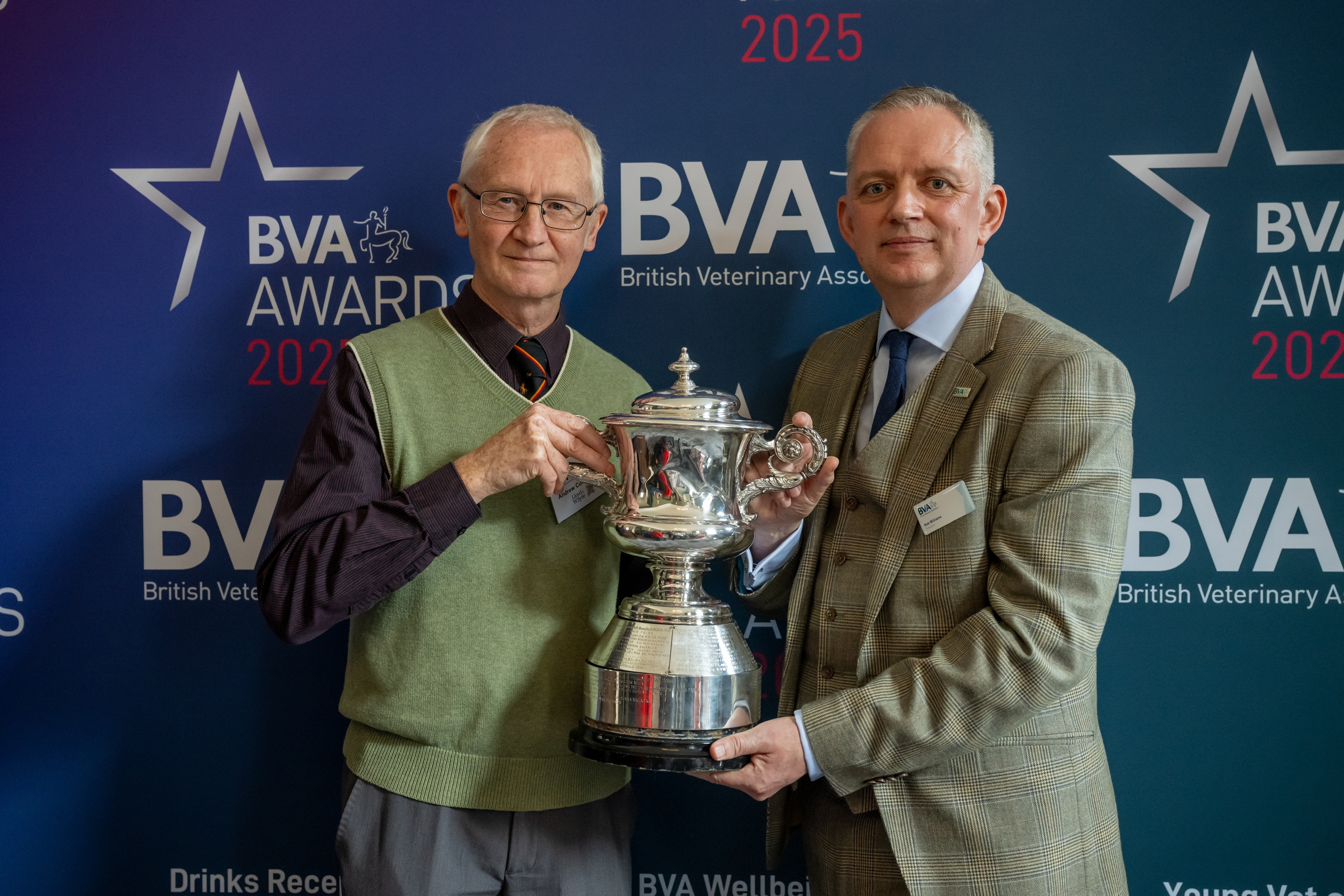
When I was first notified, by email, that I had been awarded the 2025 Dalrymple-Champneys cup and medal by the BVA, I was in disbelief. But when it was confirmed, I was both thrilled and humbled. It means the world to me to have such recognition by my peers within the veterinary profession.
My parents tell me that even before I went to primary school I was totally focussed on wildlife, and announced I was going to be a vet or a zookeeper. Driven by a desire to do something practical for species conservation in the veterinary field, I pushed my non-academic brain at school and achieved the necessary exam results to get into university. I went to vet school in the 1980s and, at that time, an interest in wildlife was generally frowned upon, but two members of the faculty who deserve special mention – Mary Stewart and Mike Purton – kept my dreams alive.
I have been extremely lucky in my career, coming into the profession at a time when disease was only just beginning to be recognised as a conservation issue. My work has substantially contributed to this recognition through my discovery of a new epidemic ranaviral disease of amphibians in Europe and the first definitive report of the global extinction of a species by an infectious disease. I have led several international and multi-disciplinary wildlife disease research projects, including the investigation of vulture declines in South Asia and the international team that discovered the chytrid fungus that is currently causing world-wide amphibian population declines and extinctions. This discovery of amphibian chytridiomycosis and its global impacts on amphibians has to be the most impactful of all my research outcomes and for this I was awarded a medal by the CSIRO in Australia.
In 2010, I won a Royal Society Wolfson Research Merit Award for my work on zoonotic viruses in African bats and in 2016 I became a Fellow of the Royal College of Veterinary Surgeons for meritorious contribution to knowledge.
During the Covid pandemic, I become more involved in policy, and I was appointed as a first term member of the Quadripartite’s One Health High Level Expert Panel and as a member of the WHO/Europe One Health Technical Advisory Group. Currently, I sit on Defra’s Wildlife Disease Core Group.
Over the years I have seen the importance of wildlife disease rising up the veterinary and political agendas, and not just in terms of wild animals being a source of pathogens for livestock or people, but as an important issue in its own right. The role veterinarians can play in this field is vast and growing, and there is increasing demand for holistically-trained vets to get involved in One Health research, implementation and policy which extends well beyond the previously narrow focus of zoonoses.
This is something vet schools need to embrace, perhaps primarily through the provision of more opportunities for transdisciplinary postgraduate training but also having this thought leadership running throughout the undergraduate syllabus.
Having been told at one point as a veterinary student that my interest in wildlife would bring the profession into disrepute, it is just fantastic to have had my career validated by this reward from the veterinary profession. I hope this award for my research on wildlife disease and conservation gives encouragement to others to follow a similar path if that is their passion.
Get tailored news in your inbox and online, plus access to our journals, resources and support services, join the BVA.
Join Us Today