 LOGIN
LOGIN

The veterinary voice for animal welfare: reflecting on BVA’s updated Animal Welfare Strategy
11 Jul 2025
Following on from the launch of BVA's policy position on parasiticides use in grazing animals, Sheep Veterinary Society and SCOPS share an in-depth insight into their vital work in responsible parasite control over the last two decades.
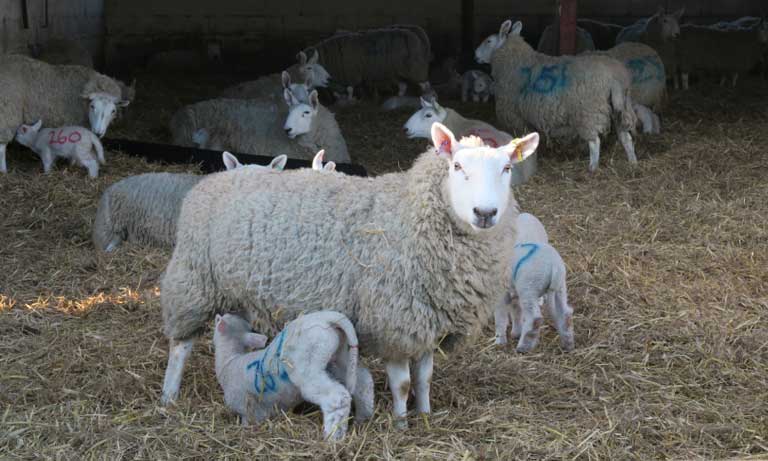
Since the first case of benzimidazole resistance was reported in the UK in 1984, the responsible use of parasiticides has been a topic of much discussion. The recent BVA policy for grazing animals aims to encourage parasite management plans that slow the development of parasiticide resistance and raise awareness of their potential environmental impact. This builds on work already done through organisations such as SCOPS, COWS and CANTER.
SCOPS (Sustainable Control of Parasites in Sheep) was formed in 2003, representing all industry stakeholders. It has developed sustainable, responsible and practical strategies for parasite control in sheep and facilitated the delivery of these recommendations to the industry. While the group initially focussed on roundworms, SCOPS has expanded its remit to include liver fluke and the appropriate use of flukicides, and external parasites including sheep scab, lice, blowflies and ticks.
SCOPS developed four principles to reduce resistance, which have become the foundation of sheep parasite control plans and have been adopted industry wide:
Following the success of SCOPS, COWS (Control of Worms Sustainably) was established in 2010 by stakeholders including academics, vets, SQPs and farmers. It provides the latest evidence-based advice on the control of round worms, lungworm, liver fluke, lice, mites, ticks and flies to beef and dairy farmers. It aims to balance cattle welfare with concern for the environment and preventing development of anthelmintic resistance.
At the core of COWS is the technical manual which includes up-to-date technical information and advice. It also produces regular information for farmers and vets on testing before treating and responsible prescribing and administration.
CANTER (Controlling Antiparasitic Resistance in Equines Sustainably) was set up in 2023 as anthelmintic resistance in equine nematodes was increasing and provides guidelines for sustainable equine worm control.
SCOPS, COWS and CANTER all work closely together and with other industry bodies, such as RUMA, AMTRA, NOAH, AHDA and VMD, to increase the reach and impact of their work.
The groups also work closely with the species-specific veterinary bodies, alongside leading parasitologists, animal health consultants and the farming/equine communities to produce guidance, for example, on the lifecycles of all sheep parasites and information on all licensed treatments, ways of monitoring efficacy and quarantine advice. This advice feeds into the SCOPS and COWS technical manuals, which are regularly updated to allow easy access up to date, evidence based advice on parasite control.
The current Sustainable Farming schemes (Box 1) for each nation of the UK offer farmers the opportunity to engage veterinary advice and assess treatment efficacy on their farm. These schemes form a key pillar of each Government’s commitment to enhance productivity and animal health on farm. In England and Scotland, financial support is available for faecal egg counts and wormer treatment checks via pre and post treatment faecal egg counts. In England, SCOPS has been a key stakeholder in the design of the Worming Treatment Check, a robust, standardised protocol, which provides the farm and vet with meaningful information and guides them through the process. In England and Wales, funding is already, or will be, available for farms to work with their vets and advisors on training, and investigating health issues on farm, including parasites. In Northern Ireland, funding is available for training, the sheep specific scheme is yet to be announced at the time of writing.
|
Box 1: Links to access information on the Sustainable Farming schemes in the devolved nations. |
SQPs must undergo training to attain and retain their prescribing registration, which has a significant emphasis on parasite control and is based on SCOPS and COWS principles. SQPs often have good understanding of local farming systems, therefore vets, SQPs and farmers should develop close working relationships, to find practical, effective parasite management options and develop monitoring strategies to inform treatment. Indeed, some SQPs offer faecal egg counts alongside an in-depth knowledge of the products they prescribe, enabling them to provide appropriate advice on sustainable parasiticide use. Improving two-way communication between SQPs and vets, as recommended by the BVA policy, will drive sustainable use of parasiticides and improve the sustainability of farming businesses and the relationships between farmers, their vets and their SQPs.
To slow development of resistance, we need to continue the great work initiated by SCOPS, to ensure that parasiticide products are used as much as necessary but as little as possible. Vets and farmers can in many cases use Sustainable Farming schemes to carry out testing and check that treatments are working correctly. By working together, SQPs, vets and farmers can share knowledge of test results, treatment strategies, treatment history and grazing management to continue improving responsible parasiticide use in grazing animals.
|
Veterinary CPD – Where to get up to date education The species-specific veterinary bodies provide regular CPD on parasite control and responsible use of parasiticides.
|
Get tailored news in your inbox and online, plus access to our journals, resources and support services, join the BVA.
Join Us Today