 LOGIN
LOGIN
Chiari malformation and syringomyelia scheme
Working to reduce Chiari malformation and syringomyelia across all dog breeds.
Working to reduce Chiari malformation and syringomyelia across all dog breeds.
Chiari malformation is characterised by a mismatch in size between the brain (which is too large) and the skull (which is too small). This may block the opening from the skull to the spine and alter the flow of cerebrospinal fluid around the spinal cord.
As a result, fluid-filled cavities called syrinxes can develop within the spinal cord – this condition is called syringomyelia. These conditions can result in intense pain and have serious effects on the health, welfare and behaviour of dogs.
Although some dogs may seem fine, other dogs may experience intense pain and suffering. Signs include:
Unable or unwilling to exercise
Head scratching - 'air-scratch' without making contact with the body
Increased sensitivity to touch, especially around the head, neck, shoulders and breast bone
Rubbing the face repeatedly
Excessively licking their paws
It is very important to discuss any concerns with your veterinary surgeon.
There is no one specific treatment for Chiari malformation and syringomyelia. Pain relief can be prescribed and surgery is an option.
You should always seek advice from your veterinary surgeon.
Our scheme uses MRI scans to examine the brain and upper neck. The scans are then graded by expert veterinary surgeons, otherwise known as Scrutineers, appointed by BVA. The results should then be used to make informed breeding decisions.
Contact your veterinary surgeon and request that your dog be scanned for assessment under the Chiari Malformation/Syringomyelia Scheme.
When taking your dog for the MRI scan you must have relevant registration documentation with you.
The veterinary surgeon who carried out the MRI scan will then submit the images and relevant information to CHS.
Scrutineers appointed by BVA will grade the images.
The results will be returned to the veterinary surgeon and passed on to yourself.
If your dog is registered with the Royal Kennel Club, the results will also be published on the Kennel Club website.
A single submission to this scheme is £100 (please notes this does not include the veterinary and MRI scan costs). A full breakdown of costs can be found on our submissions fees page.
Once our expert veterinary surgeons have graded the MRI scan, the owner of the dog will receive a certificate showing a grade for Chiari malformation and a separate grade for syringomyelia. The lower the grade the better - the best grade is 0 and the worst is 2.
The age of the dog at the time of scanning is also shown in the grading:
The grade is qualified with a letter indicating the age group at the time of scanning as follows: a = more than 5 years; b = 3 to 5 years or age; c = 1 to 3 years of age
There are currently no Estimated Breeding Values available for the Chiari malformation/syringomyelia, however there are breeding recommendations.
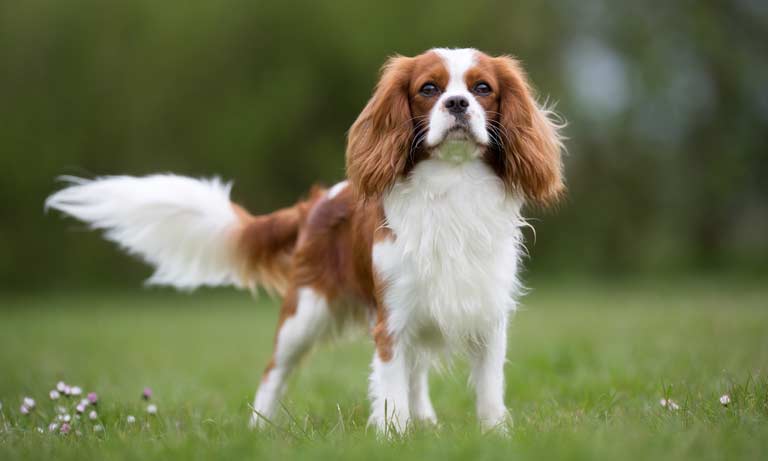
Chiari malformation/syringomyelia has been shown to be inherited in the Cavalier King Charles Spaniel and the Griffon Bruxellois and is suspected to be inherited in the King Charles Spaniel.
Other breeds reported with the condition include:
Affenpinschers
Boston Terriers
Chihuahuas
Havanese
Maltese
Papillons
Pomeranians
Yorkshire Terriers
The Scheme is open to all dogs, including crossbreeds.
The results will be uploaded to your vet's portal and passed on to you. We always recommend discussing the result with your vet.
If your dog is registered with the Royal Kennel Club, the results will also be published on the Royal Kennel Club website.
The schemes have a robust appeals process, which is open to any breeder or owner who disagrees with the score for their dog. The radiographs are re-evaluated by two further scrutineers who are unaware of the original score/grade and then reviewed by the Chief Scrutineer. The final appeal score is therefore based on the professional opinion of five scrutineers. Find out more about our process here.
We are always looking for new scrutineers to join our expert panel. If you are interested in becoming a scrutineer, please send an email detailing your interest and qualifications to [email protected].
Visit our CHS help centre to see answers to frequently asked questions.
If you can't find your answer there, you can contact our expert in-house CHS team via email: [email protected]
To ensure the highest standards, expert veterinary surgeons appointed by BVA are responsible for scoring and grading all our hip, elbow and CM/SM submissions. All our eye panellists who perform the clinical examinations are specialists in ophthalmology.
Visit our CHS help centre to see answers to frequently asked questions.
If you can't find your answer there, you can contact the CHS team via email: [email protected]